
Best Time to Pour Concrete in Naples FL: Seasonal Guide
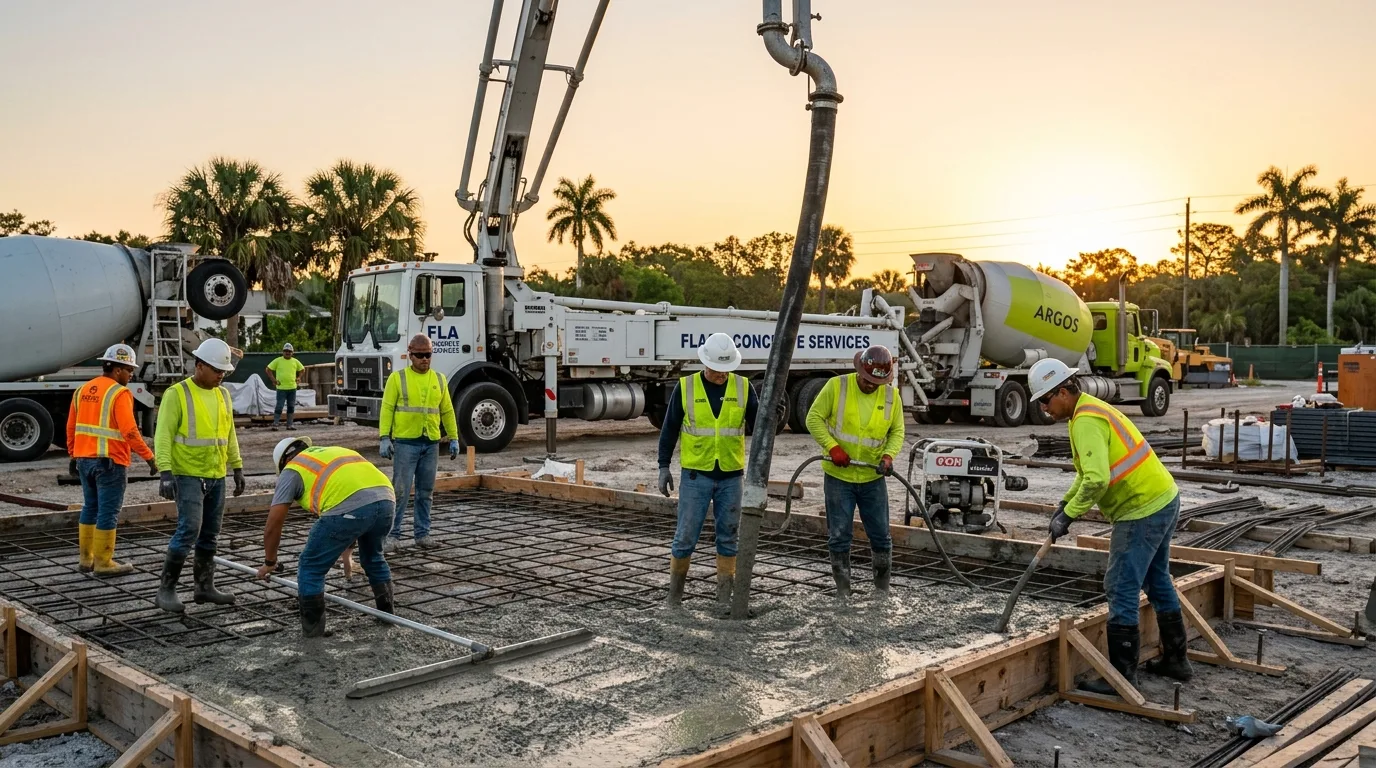
Ask any Naples homeowner who has tried to schedule concrete work and you’ll hear the same story: the dry season fills up fast, summer thunderstorms push pours back, and by the time you find availability, it’s August. Naples’ tropical savanna climate creates a concrete scheduling puzzle that doesn’t exist in most of the country — and understanding the seasonal dynamics helps you book the right time and set the right expectations. This post breaks down what each season means for concrete work in Collier County and when to schedule your project.
Schedule Your Naples Concrete Project — Free Estimate
Call Naples Concrete Pros at (888) 376-0955 to check availability for your project.
Naples’ Seasonal Climate and Concrete
Naples averages 264+ sunny days per year and 54 inches of annual rainfall — concentrated in a June–September rainy season that can drop several inches in a single afternoon thunderstorm. The rest of the year is predominantly dry, with temperatures dropping to comfortable 70s–80s°F from November through April. This pattern creates two very different concrete environments:
Dry season (November–April) — Mild temperatures, low humidity, minimal rain probability. Ideal concrete curing conditions. Peak demand from seasonal residents. Contractor calendars fill quickly November through March.
Wet season (June–September) — Daily afternoon thunderstorms, high humidity, temperatures in the upper 80s–90s°F. Challenging curing conditions that require hot-weather concrete protocols. More contractor availability, but scheduling must work around daily storm windows.
Shoulder months (October, May) — Transitional. October brings decreasing storm frequency; May sees increasing heat before the rainy season peaks. Both can be good windows with appropriate expectations.
Why the Dry Season Is Ideal for Concrete in Naples
November through April checks every box for optimal concrete performance in Naples:
Temperature — Air temperatures in the 70s–80s°F slow concrete set to a rate that gives crews adequate finishing time. This matters particularly for stamped concrete, where the stamping window must align with surface set.
Low humidity — Florida’s summer humidity is absent. Lower humidity means slower surface evaporation from fresh concrete, which reduces the risk of plastic shrinkage cracks caused by surface drying faster than the concrete interior.
Rain probability — In the heart of dry season (December–February), Naples receives almost no rain. There’s no need to watch afternoon weather forecasts or build in storm contingency on pour days.
Curing conditions — Concrete cures through a chemical hydration reaction that requires moisture but is disrupted by extreme heat. The 70s–80s°F range is close to the optimal temperature range for concrete hydration.
The downside is demand. Naples’ snowbird population peaks from December through March, and the same favorable conditions that are good for concrete are good for every other outdoor project. Contractor calendars fill up — especially for premium decorative work in North Naples communities like Pelican Bay, where backlog can push to 6–8 weeks.
Hot Weather Concrete in Naples Summer
Summer concrete work in Naples is not impossible — it just requires more care and better process. When air temperatures exceed 90°F, concrete sets faster than designed because heat accelerates the hydration reaction. Faster set means less time to finish, less time to stamp, and more risk of plastic shrinkage cracking as the surface dries faster than the interior hydrates.
Naples Concrete Pros uses standard hot-weather protocols for summer pours:
Cool water in the mix — Ice is sometimes added to the mix water to lower the concrete temperature before placement. Lower concrete temperature extends workability.
Set retarder — A chemical admixture that slows the initial set, extending the finishing and stamping window to a manageable duration even in 90°F+ heat.
Pre-wet base — Wetting the base rock and forms before the pour reduces heat absorption from the substrate.
Shade and protection — Where practical, shading the fresh concrete surface during initial curing reduces surface temperature and moisture loss.
Early morning pours — Scheduling pours at 6–7 AM takes advantage of the coolest part of the day before afternoon heat peaks. Finishing is often complete before the hottest afternoon temperatures arrive.
Thunderstorm management — The bigger summer challenge is rain, not just heat. Naples’ afternoon thunderstorms are intense and can arrive in minutes. We monitor hourly forecasts on pour days and build in a rain contingency plan for every summer project.
Practical Uses: When to Schedule Your Naples Concrete Project
- Stamped concrete driveway or patio — Schedule November through February for best results. The narrow stamping window is most forgiving in cool, low-humidity conditions. This is the highest-stakes timing situation in concrete work.
- Plain concrete driveway — Feasible year-round with good results. Summer pours require hot-weather protocols but plain broom-finish is more forgiving of timing variation than decorative work.
- Concrete slab for new construction — Coordinate with overall project timeline. New construction in Naples doesn’t always have the luxury of seasonal timing, and contractors adapt accordingly.
- Pool deck replacement — Schedule in October–November to have the deck ready before the peak snowbird season. Pool decks scheduled in February–March may not be complete before the busy spring entertaining season.
- Concrete repair — Crack fills and small patches can be done year-round. Major resurfacing projects benefit from dry-season consecutive dry days.
- Investment property — If timeline is flexible, October is often a good window — shoulder demand, decreasing storms, and most contractors available before the November rush.
Check Availability for Your Naples Concrete Project
Naples Concrete Pros schedules strategically around Naples' seasonal patterns. Call (888) 376-0955.
The Shoulder Season Opportunity
October and May are underutilized windows in Naples concrete scheduling. October brings lower contractor demand than peak dry season, decreasing storm frequency compared to summer, and temperatures beginning to moderate from summer highs. For Naples homeowners with project flexibility, October scheduling often delivers shorter lead times and the same quality outcome as peak dry season.
May is workable before the rainy season’s peak intensity in June–September. Temperature and humidity are rising, and heat management protocols become increasingly important — but May thunderstorm patterns are less intense and less frequent than June–September. Homeowners who want dry-season quality but missed the November–April window should consider late April or early May as a transitional option.
What Happens If It Rains on Your Pour Day in Naples
Rain is the most common disruption to concrete work in Naples — particularly during the June–September rainy season when afternoon thunderstorms arrive with little warning. The impact of rain on fresh concrete depends on timing:
During placement — Rain that falls while concrete is being placed or worked dilutes the surface water-to-cement ratio, weakening the surface layer. We delay pours or halt placement when rain arrives at this stage.
During initial set (0–4 hours) — Rain on concrete that is beginning to set but hasn’t hardened creates surface pitting and dilution damage. We cover poured concrete with plastic sheeting if rain is imminent during this window.
After initial set (4+ hours) — Rain after initial set is generally not harmful and can actually aid the curing process by maintaining moisture.
Frequently Asked Questions
Can you pour concrete in the rain in Naples?
We do not pour concrete in active rain — rain on fresh concrete before initial set dilutes the surface and weakens it. However, concrete poured under clear skies and then exposed to rain 4+ hours later is generally fine. We monitor hourly forecasts on every pour day and build rain contingency plans for all summer projects.
What is the worst time of year for concrete in Naples FL?
Late August through early September is the most challenging period — this is when afternoon thunderstorm frequency and intensity peak, when temperatures are highest, and when the wet season is at its most concentrated. We work in this window with appropriate precautions but recommend dry-season scheduling for complex or decorative projects when timeline allows.
Does humidity affect concrete quality in Naples?
Very high humidity (above 80%) creates two competing effects on fresh concrete: it slows surface evaporation (which reduces plastic shrinkage cracking risk) but also reduces the temperature differential that helps with normal curing. In practice, Naples’ summer humidity is manageable with proper protocols. The thunderstorm risk is a larger scheduling factor than humidity per se.
Schedule Your Naples Concrete Project Now
Naples Concrete Pros plans around Naples' seasonal patterns. Serving Naples, Marco Island, Bonita Springs, and all of Collier County.
Related: