
Stamped Concrete Patios Naples: Patterns, Colors & Costs
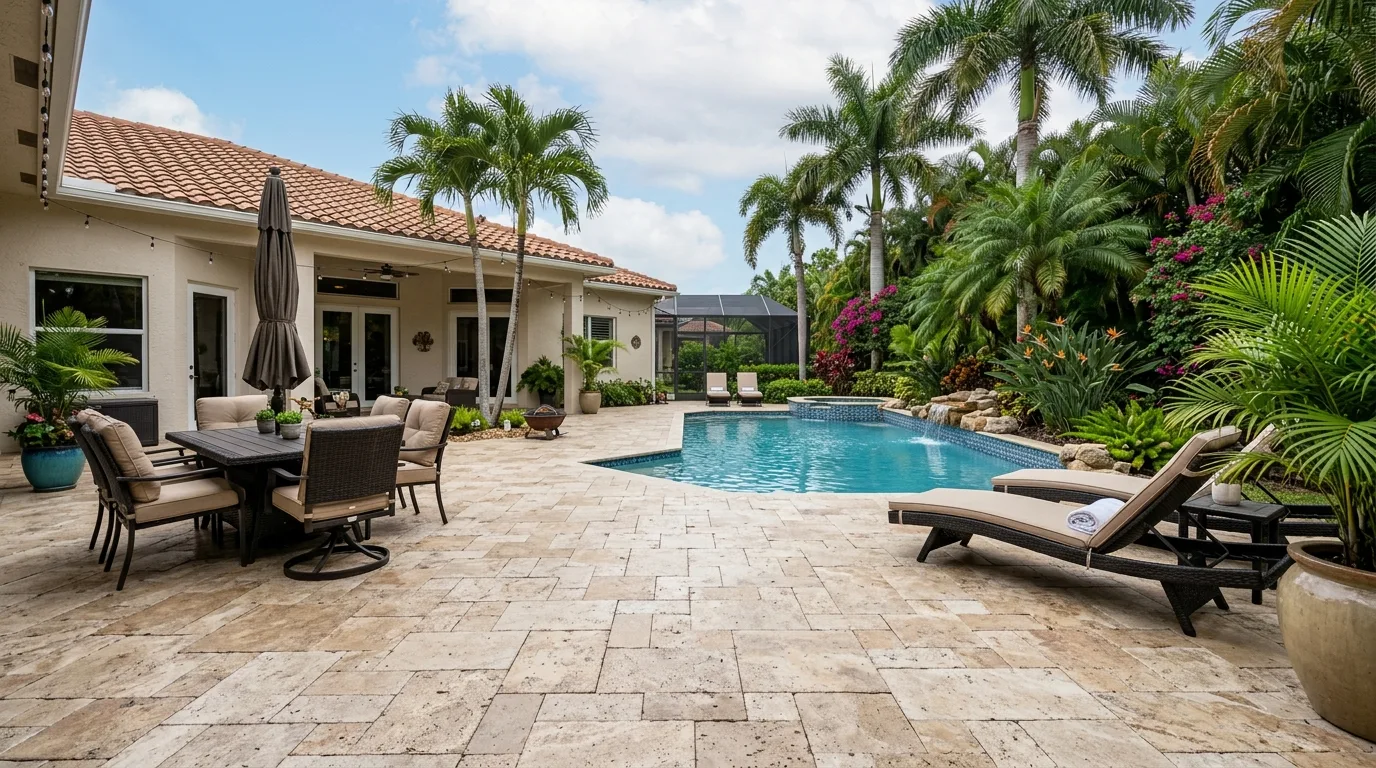
Your Naples patio gets used almost every month of the year — and with over 264 sunny days annually, it also absorbs more UV exposure than patios in nearly any other American city. The right decorative concrete system lasts for decades here; the wrong one fades, cracks, and peels within 3–5 years. This post covers the patterns, colors, and costs that work best for stamped concrete patios in Naples, what makes some systems fail in Collier County’s climate, and how to pick a finish that still looks sharp a decade from now.
See Stamped Concrete Samples for Your Naples Patio
Free design consultations available — call Naples Concrete Pros at (888) 376-0955.
Why Stamped Concrete Works Well for Naples Patios
Stamped concrete combines the durability of flatwork with the aesthetic of natural stone or brick — without the maintenance gaps, shifting, and weed infiltration that pavers develop over time in Naples’ wet season. A sealed stamped concrete patio has no joints for weeds to grow in, no pavers to settle unevenly after Collier County’s rainy season raises the water table, and no grout to deteriorate under the salt air near coastal neighborhoods like Naples Park.
The outdoor lifestyle that Naples’ tropical climate enables — year-round dining, entertaining, and poolside living — puts a premium on surfaces that are both attractive and practical. Stamped concrete delivers both when installed correctly with the right sealer for Florida’s UV intensity.
Types of Stamped Concrete Patterns for Naples Patios
Ashlar slate — The most popular pattern in Naples, replicating large flagstone tiles with subtle texture variation. Works with Mediterranean, Tuscan, and contemporary architecture. Available in light buff, sandstone, and gray tones that stay cooler underfoot than darker options.
Cobblestone — Circular cobblestone patterns add old-world character popular in Old Naples and Downtown Naples historic neighborhoods. More labor-intensive than large-format patterns, which increases cost slightly.
Random stone — Irregular natural stone replication with organic edge lines. Excellent for pool deck surrounds in communities like Lely Resort where the goal is resort-style aesthetic without the maintenance of real stone.
Herringbone brick — Classic brick pattern works well for Naples homes with traditional or cottage architecture. The smaller module size creates more pattern repetition and requires more stamp passes, which increases the timing challenge in summer heat.
Wood plank — Linear wood plank patterns suit Coastal and Florida Modern architectural styles. The plank texture provides good traction when wet — a practical advantage near pool decks and spa areas.
Exposed aggregate — Technically not stamped, but often considered alongside it: aggregate is seeded into the surface and the cement paste is washed away to reveal stone texture. Excellent for pool decks due to its natural non-slip grip.
Color Options for Naples Stamped Concrete
Color in stamped concrete comes from two sources: a base color added as integral pigment or broadcast hardener, and a contrasting highlight color from the release agent applied before stamping.
Base colors for Naples — Warm buff, sandstone, terracotta, and light gray are the most popular Naples selections. These lighter tones absorb less heat than darker colors — a meaningful comfort factor when you’re walking barefoot on a Collier County patio in July.
Accent/release colors — The contrasting release color is what gives stamped concrete its depth and realism. Dark brown over buff creates a convincing flagstone look; charcoal over gray creates slate-like contrast. Double-colored releases with two contrasting tones add the most dimensional appearance but require more skilled application.
Color fading — Naples’ UV intensity is the primary enemy of integral color vibrancy. Surface-sealed concrete (using high-quality acrylic sealer with UV stabilizers) holds color significantly better than unsealed concrete. Plan to reseal every 2–3 years to maintain the appearance. Cheaper sealers — including many sold at home improvement stores — are not rated for Florida’s UV level and yellow or peel within 1–2 seasons.
Practical Uses for Stamped Concrete in Naples
- Main patio behind the home — A 400–600-square-foot stamped patio for outdoor dining and entertaining is the most common Naples application. Ashlar slate or random stone in sandstone tones works with most Naples home styles.
- Pool deck surround — Stamped concrete can wrap the pool deck for a unified aesthetic, though lighter colors and slip-resistant finishes are important for safety. Exposed aggregate is often preferred specifically at pool edges.
- Driveway apron or courtyard — Stamped sections at the driveway entry or entrance courtyard add visual impact at the highest-visibility part of the property — popular in North Naples and Pelican Bay.
- Front walkway — A stamped concrete walkway from driveway to front door adds curb appeal for relatively low cost compared to a full patio — typically 100–150 square feet.
- Outdoor kitchen base — A defined stamped concrete zone under an outdoor kitchen structure provides a clean, water-resistant base that complements the overall outdoor living design.
- Pool equipment pad — A smaller stamped section that matches the main pool deck keeps the equipment area visually integrated rather than looking like an afterthought.
Free Stamped Concrete Consultation for Your Naples Home
Naples Concrete Pros brings color and pattern samples to your property. Call (888) 376-0955 to schedule.
How Stamped Concrete Performs in Naples’ Climate
Naples’ wet-dry seasonal cycle creates the primary performance challenge for stamped concrete. Collier County’s clay soils move seasonally — expanding in the June–September rainy season and contracting in the dry season — which puts stress on concrete slabs that aren’t designed for it. Control joint placement in stamped concrete is particularly important: joints must be located at structural stress points while integrating with the visual pattern so they don’t interrupt the design.
The other factor specific to Naples is the narrow stamping window during summer heat. When air temperatures exceed 90°F — routine from June through September — concrete sets faster than in cooler conditions, giving crews less time between pour and stamp. An inexperienced crew working in August heat may rush the stamping, producing shallow texture and poor pattern detail that looks flat even under ideal lighting. This is one of the strongest reasons to hire crews with established Naples-area experience rather than general contractors who happen to offer decorative concrete.
The salt air environment in coastal Collier County neighborhoods near Naples Park and Marco Island requires extra attention to sealer selection. Standard acrylic sealers provide adequate protection in inland Naples; coastal properties benefit from penetrating silane/siloxane sealers that resist salt crystallization in concrete pores.
What Stamped Concrete Patios Cost in Naples
Stamped concrete patios in Naples cost $12–$22 per square foot installed in 2026. The base slab component runs $8–$15/sq ft for Southwest Florida reinforced flatwork — stamping, coloring, and sealing add $4–$8/sq ft depending on pattern complexity and color count.
Key cost variables:
- Surface area — Smaller patios cost more per foot (fixed setup costs amortized over fewer square feet)
- Pattern complexity — Ashlar slate with one color is significantly less expensive than a medallion design with custom border
- Color count — Each additional accent color adds material and handling time
- Site access — Tight access, overhead obstacles, or significant regrading adds cost
A standard 400-square-foot ashlar slate patio in East Naples in 2026 runs approximately $5,600–$8,800 installed.
Frequently Asked Questions
How long does a stamped concrete patio last in Naples FL?
Properly installed and maintained stamped concrete lasts 25–35 years in Naples. The critical maintenance is resealing every 2–3 years with a UV-stabilized acrylic sealer rated for Florida’s solar intensity. Collier County’s wet-dry seasonal soil movement can cause hairline cracking at control joints over time — this is cosmetic in sealed concrete and does not indicate structural failure if joints were properly planned.
Can stamped concrete get slippery in the rain?
Standard stamped concrete can become slippery when wet, particularly in patterns with smooth surface texture. For Naples pool decks and areas exposed to frequent water contact, we recommend adding a non-slip additive to the final sealer coat or selecting patterns with inherent texture grip like exposed aggregate or coarser stone patterns. All our pool deck installations include slip-resistance specification by default.
Does HOA approval affect stamped concrete in Naples?
Many Naples communities — including those in Pelican Bay, Lely Resort, and Vineyards — have HOA architectural review requirements that cover exterior surface changes. We can provide material specifications, color boards, and product documentation to support your ARB submission. Most HOAs approve decorative concrete readily when the design complements the neighborhood aesthetic.
Start Your Naples Stamped Concrete Patio Project
Free estimates from Naples Concrete Pros. Serving Naples, Bonita Springs, Marco Island, and all of Collier County.
Related: