
Hurricane Prep: How Concrete Protects Your Naples Home
Naples sits in one of the most hurricane-exposed locations on the U.S. coast — Collier County is in a high-probability impact zone for Gulf storms tracking northeast across Florida. Hurricane Ian in 2022 demonstrated what surge and wind can do to the Naples coastal zone, damaging properties from Marco Island to Naples Park and leaving behind hard lessons about what building materials hold up and what doesn’t. Concrete is central to Naples’ storm resilience story — this post explains how concrete flatwork, foundations, and site structures contribute to hurricane protection.
Hurricane-Ready Concrete for Naples Homes — Free Estimates
Naples Concrete Pros designs and pours concrete built for Southwest Florida storm exposure. Call (888) 376-0955.
What Concrete Protects Against in a Hurricane
Hurricanes threaten Naples properties through four main mechanisms: wind, storm surge flooding, wind-driven rain infiltration, and post-storm erosion and drainage damage. Concrete addresses each of these differently:
Wind — Concrete itself is wind-resistant in the structural sense — it provides the foundation mass that resists overturning of structures above it. Properly anchored wall systems and roof trusses tied to concrete foundations perform significantly better in hurricane-force winds than foundations without proper anchor bolt and tie-down specifications.
Storm surge — Surge flooding is the most destructive hurricane force in coastal Naples. Concrete doesn’t float, warp, or disintegrate in surge water the way wood, drywall, and flooring materials do. Properties with concrete slabs and concrete block construction typically recover from surge flooding faster and with lower restoration costs than wood-frame structures on the same elevation.
Wind-driven rain — Concrete slabs sealed with quality penetrating sealers resist moisture infiltration from lateral wind-driven rain far better than unsealed concrete. After Ian, many Naples homeowners found that sealer condition correlated directly with moisture infiltration through the slab level.
Post-storm erosion — Flooding and surge recede, but they take soil with them. Exposed soil beneath or around concrete slabs that lack proper drainage and erosion control can undermine foundation stability even after the storm passes. Properties with properly designed concrete flatwork and perimeter drainage experience significantly less post-storm erosion damage.
Concrete Features That Improve Hurricane Resilience
Elevated and reinforced foundation slabs — Naples properties in flood zones should have slabs elevated above base flood elevation (BFE) per FEMA flood map requirements. Elevated slabs with reinforced stem walls provide better surge resistance than ground-level slabs. Post-tension or reinforced slab designs distribute storm loads more effectively than standard residential minimums.
Concrete driveways with proper drainage — A concrete driveway that slopes away from the home and connects to functional street drainage reduces the flood load against the garage door and ground-floor entry points during a storm event. After Ian, homeowners with drainage-designed driveways saw significantly less surge intrusion into garages than those with flat or incorrectly sloped driveways.
Concrete seawalls and retaining walls — Properties near the water in Old Naples, East Naples near the Naples Botanical Garden waterways, and coastal sections of Marco Island rely on concrete seawalls as the primary protection against surge. Seawall maintenance — filling voids behind the wall, repairing deteriorated concrete, maintaining weep holes — is hurricane preparation as much as it is routine maintenance.
Pool decks with proper drainage — A pool deck with inadequate drainage becomes a pond during heavy rainfall, adding hydrostatic load against the home’s foundation and flooding low points of the structure. Proper concrete pool deck drainage slope is hurricane preparation — the pool deck becomes a drainage surface during a storm event.
Concrete block outbuildings and storage — Detached concrete block garages and storage buildings fare significantly better in hurricane-force winds than wood-frame sheds and prefabricated metal buildings. For Naples properties with acreage — particularly in Golden Gate Estates — concrete block outbuildings are a meaningful investment in wind resistance.
Storm-Ready Concrete for Naples Properties
Free estimates on driveways, slabs, and site concrete designed for Southwest Florida storm conditions. Call (888) 376-0955.
Lessons From Hurricane Ian for Naples Concrete
Hurricane Ian’s 2022 impact on Southwest Florida — which included a direct hit on the Lee-Collier County area — provided real-world data on concrete performance under extreme conditions. Several patterns emerged:
Drainage design mattered most — Properties with concrete flatwork designed for drainage — slope away from structures, connected to functional culverts and drainage channels — experienced dramatically less surge and flooding damage than properties where concrete flatwork actually directed water toward the structure.
Sealer condition correlated with moisture intrusion — Slabs with intact penetrating sealers showed significantly less moisture infiltration and efflorescence after storm flooding than slabs with failed or absent sealers. The penetrating sealer difference was visible in post-Ian inspections.
Elevation and anchor systems made the critical difference — Concrete foundations properly tied to the structure above them via anchor bolts and hurricane straps performed significantly better than foundations where the connection detail was inadequate. The slab’s storm performance is only as good as its connection to what sits above it.
Post-storm erosion affected ungrouped concrete — Sections of concrete flatwork without proper perimeter edge treatment experienced more sub-base erosion when surge water passed beneath or around them. Edge anchoring and proper sub-base containment reduce this vulnerability.
What Naples Homeowners Should Do Before Hurricane Season
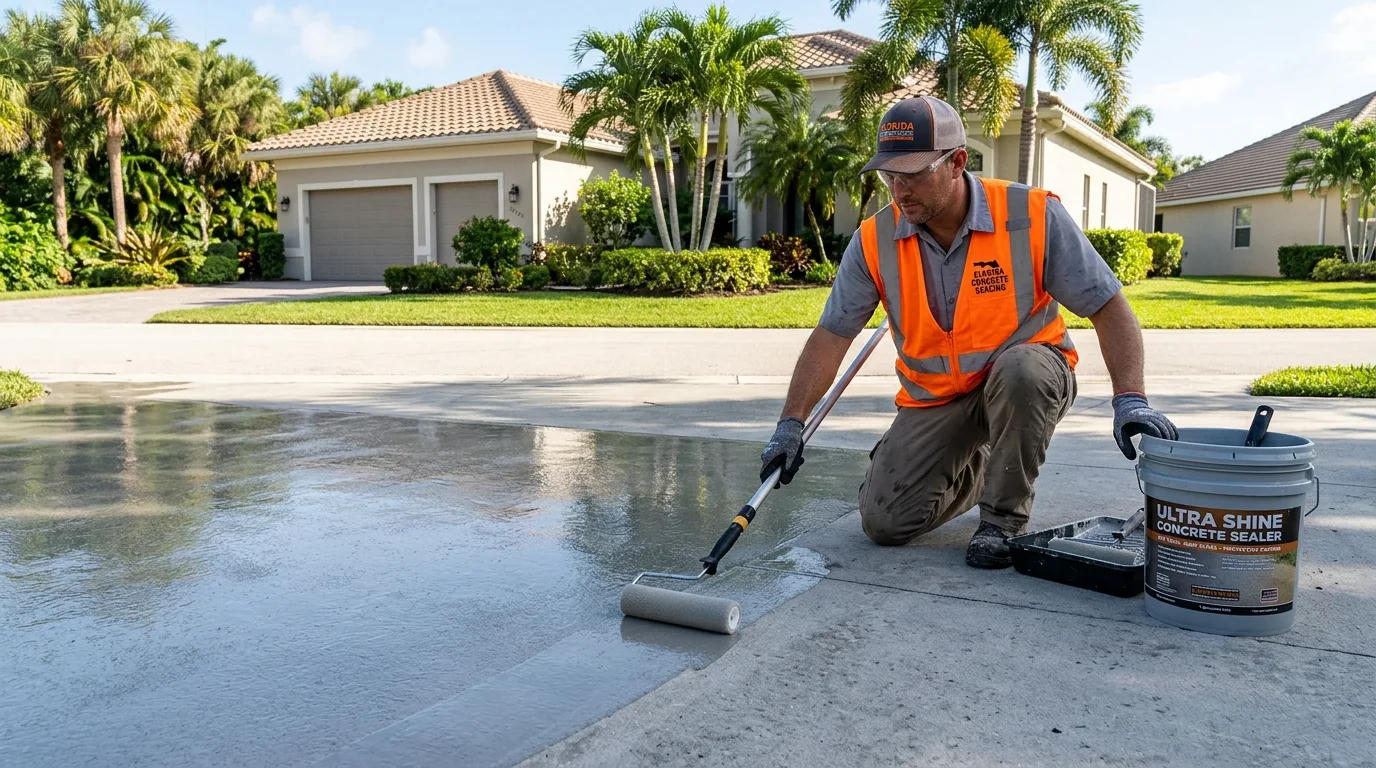
Inspect and reseal concrete — Before each June 1 hurricane season start, inspect your driveway, patio, and pool deck sealer condition. Flaking, chalking, or visibly worn sealer should be renewed with a penetrating silane/siloxane system before summer. This is the single highest-impact maintenance action for storm resilience.
Verify drainage slope — Walk your property after a heavy rain (which happens frequently April–June in Naples) and observe where water goes. Water flowing toward the home’s foundation or garage door is a drainage problem to correct before hurricane season. Concrete slope correction is possible without full replacement in many cases.
Check seawall and retaining wall condition — If you have a concrete seawall or retaining wall, inspect for voids behind the wall (tapping tests), cracks in the concrete face, and deteriorated weep holes. Repair before hurricane season, not after.
Assess outbuilding condition — Non-structural outbuildings that could become projectiles in hurricane winds are a hazard. Concrete block structures with proper tie-downs are significantly more resistant than wood-frame or metal panel buildings.
Practical Uses for This Information
- Pre-hurricane season checklist — Sealer inspection, drainage verification, seawall assessment, and outbuilding review
- Post-hurricane damage assessment — Concrete that survived a storm should be assessed for hidden damage (slab-base separation, sub-base voids from erosion) before being assumed structurally sound
- New construction in Naples flood zones — Insist on elevation above BFE, reinforced slab design, and concrete block construction for maximum storm resilience
- Investment in storm hardening — Concrete improvements for storm resilience (drainage correction, seawall repair, elevated slab) have both practical value and insurance discount implications
Frequently Asked Questions
Does concrete always survive hurricanes in Naples?
Concrete is significantly more storm-resistant than wood-frame or light-gauge steel structures. However, concrete is not immune to storm damage — surge undermining, inadequate reinforcement, and poor drainage design can all cause failure. Properly designed and constructed concrete consistently outperforms alternative materials in hurricane events.
How do I know if my Naples driveway drains correctly?
Pour a 5-gallon bucket of water at the driveway’s high point and observe where it flows. It should move steadily toward the street or toward designed drainage collection points — not toward the garage or home foundation. Pooling on the driveway surface or flow toward the structure indicates drainage slope problems that should be corrected.
Can concrete be repaired after hurricane damage in Naples?
Yes — concrete that has been impacted by flooding, surge, or wind-driven debris can often be repaired rather than fully replaced. The key is assessing whether the sub-base was undermined by storm erosion before any surface repair is applied. Surface patching over a voided sub-base fails quickly.
Storm-Ready Naples Concrete — Free Estimates
Naples Concrete Pros designs concrete that performs in Southwest Florida's hurricane environment. Serving Naples, Marco Island, and all of Collier County. Call (888) 376-0955.
Related: