
Marco Island Concrete: Salt-Resistant Solutions
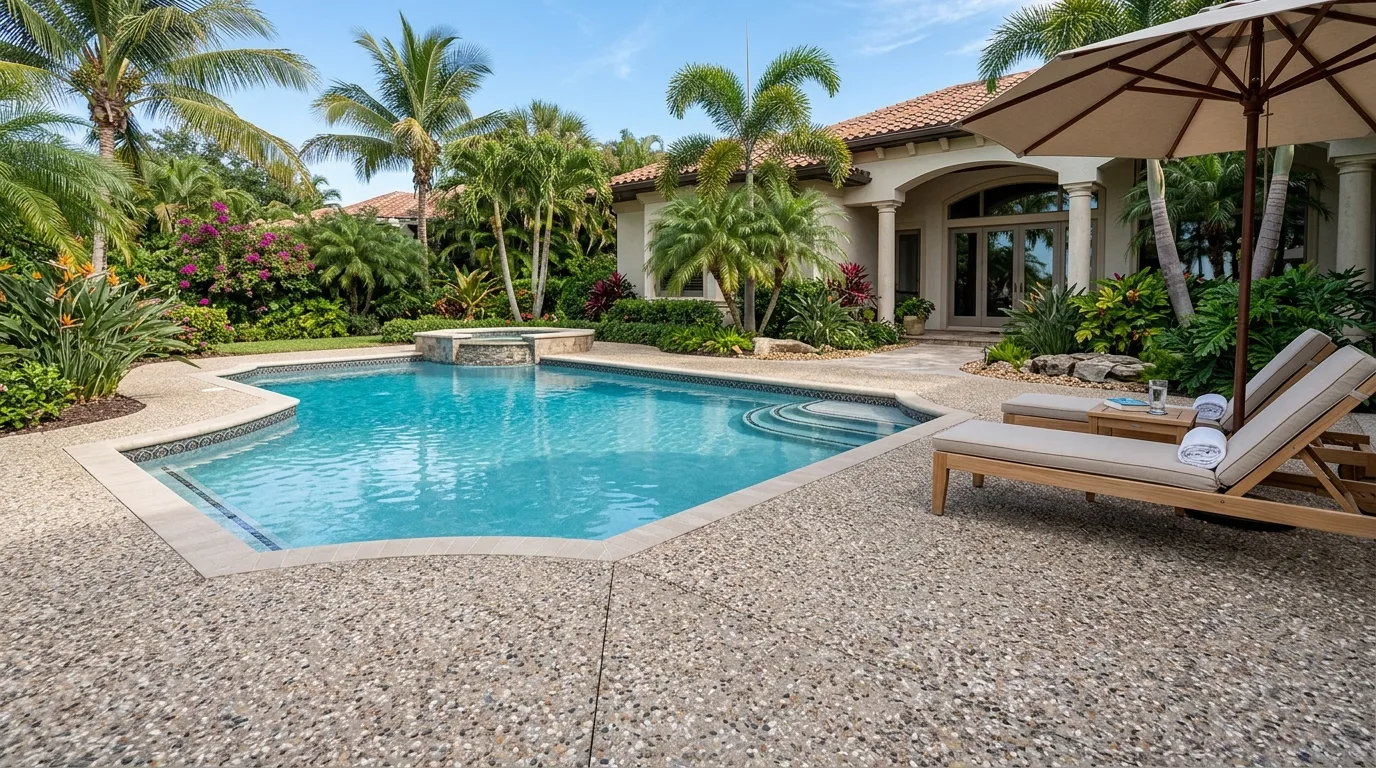
Marco Island sits 17 miles south of Naples in a saltwater environment unlike anything on the mainland. The island is surrounded by the Gulf of Mexico and Ten Thousand Islands estuary, and the salt air, salt-laden groundwater, and coastal storm exposure create concrete challenges that require specifications most concrete contractors don’t apply on standard residential projects. If you’re a Marco Island homeowner planning concrete work, this guide explains what’s different about island concrete and what specifications to insist on.
Free Concrete Estimates for Marco Island Properties
Naples Concrete Pros serves Marco Island with salt-resistant concrete specifications. Call (888) 376-0955.
Why Saltwater Environment Changes Concrete Requirements
Salt is concrete’s enemy — specifically, its enemy over time. Salt infiltrates concrete pores in two ways: salt-laden air deposits chloride ions on concrete surfaces, and groundwater near the island’s low elevation brings dissolved salt into contact with slab undersides and foundations. Once chloride ions penetrate concrete to the level of steel reinforcement, they initiate corrosion — a process that’s silent until the expanding rust causes the surrounding concrete to spall.
Marco Island’s warm, humid climate accelerates all of this. Salt air deposition rates are higher in Marco Island’s coastal environment than in inland Naples. The high water table near sea level means groundwater interactions with slabs are frequent during wet season. And the UV intensity that Naples experiences year-round applies equally to Marco Island, degrading sealers and the cement paste surface.
Standard concrete specifications designed for inland Naples or general Florida applications are inadequate for Marco Island. We specify and install concrete differently for island properties.
How Concrete Specifications Differ on Marco Island
Concrete mix — We specify 5,000 PSI concrete for most Marco Island applications vs. 4,000 PSI for inland Naples. Higher PSI concrete is denser, with lower water-to-cement ratio, which dramatically reduces porosity and chloride penetration rate. Fiber reinforcement is standard.
Reinforcement — Epoxy-coated rebar rather than black steel for structural slabs and foundations near the water. Epoxy coating prevents chloride ions that penetrate the concrete from reaching the steel surface and initiating corrosion. This is standard practice for coastal construction and non-negotiable for slabs within 300 feet of saltwater in Collier County.
Vapor barrier — Enhanced vapor barriers under all slabs on Marco Island — the standard 6-mil poly is the minimum, with 10-mil or multi-layer systems for properties at or near sea level where groundwater contact is frequent.
Cover depth — The depth of concrete over reinforcement (called “cover”) must be greater in marine environments. More concrete between the surface and the rebar gives chloride ions a longer path to travel before reaching steel. We increase cover depth per ACI 318 marine environment provisions for Marco Island applications.
Sealer — Penetrating silane/siloxane sealers rather than surface acrylic for marine-environment concrete. These penetrating sealers bond with the concrete matrix and repel water and chloride ions from within the pores — they don’t sit on the surface where they can be damaged by foot traffic or pool chemicals. Penetrating sealers last 5–10 years on Marco Island vs. 2–3 years for surface sealers.
Concrete Work Most Requested on Marco Island
Pool decks — Nearly every Marco Island property has a pool, and pool deck work is the largest concrete market on the island. Exposed aggregate in light quartz or shell aggregate is particularly popular here — the natural coastal aesthetic suits the island environment and the textured surface handles barefoot pool traffic safely.
Driveways — Marco Island driveways are exposed to airborne salt year-round. Stamped concrete in travertine or stone patterns works well aesthetically, but the sealer specification is critical — standard acrylics degrade significantly faster in the island’s salt air environment.
Sea walls and waterfront slabs — Properties with waterfront access may have concrete seawalls or dock aprons that require marine-grade concrete specifications. These are technically demanding applications where the consequences of specification errors are expensive and visible within 5–10 years.
Elevated slab structures — Some Marco Island properties have elevated structures (elevated home pads, deck structures) that require engineered concrete specifications. We coordinate with structural engineers for these applications.
Marco Island Concrete — Salt-Resistant Specifications for Island Properties
Call Naples Concrete Pros at (888) 376-0955. We serve Marco Island with proven coastal concrete specs.
What Concrete Costs on Marco Island
Marco Island concrete work runs 15–25% higher than inland Naples pricing due to:
- Higher specification materials — 5,000 PSI concrete, epoxy rebar, and penetrating sealers cost more than standard inland materials
- Travel and logistics — Marco Island requires crossing the bridge at the north end, which adds crew time and limits large equipment access
- Marine environment labor — Working near saltwater requires equipment rinsing and faster concrete delivery coordination to prevent mix degradation
A 600-square-foot plain concrete driveway on Marco Island runs $9,600–$12,000 installed vs. $4,800–$9,000 in Naples. A stamped concrete pool deck on a Marco Island waterfront property runs $16,000–$22,500 for 600 square feet. These premiums reflect real cost differences in specification and logistics — not contractor margin.
Homeowners who receive Marco Island concrete quotes at Naples inland pricing should ask specifically whether the contractor is specifying marine-grade materials. Low bids on island work typically represent either specification shortcuts or contractors who don’t understand the environment.
Frequently Asked Questions
Why does concrete deteriorate faster on Marco Island than in Naples?
Marco Island’s saltwater environment delivers chloride ions to concrete surfaces via salt air deposition and saltwater groundwater interactions. Chloride ions penetrate concrete pores and initiate reinforcement corrosion when they reach steel rebar — the resulting rust expansion causes spalling (concrete fracturing from within). This process happens faster in Marco Island’s coastal environment than in inland Naples, and requires better concrete quality, deeper cover over reinforcement, and penetrating sealers to slow it.
What sealer should I use for concrete on Marco Island?
Penetrating silane/siloxane sealers are the correct choice for Marco Island concrete. These sealers penetrate the concrete matrix and repel moisture and chloride ions from within the pores rather than forming a surface film. They last significantly longer than surface-applied acrylic sealers in Marco Island’s salt air environment and don’t peel or bubble as surface sealers can. Reapplication every 5–10 years is typical.
Can concrete last a long time on Marco Island with proper specs?
Yes — properly specified and maintained concrete performs well in Marco Island’s coastal environment. The key specifications are higher PSI concrete, epoxy-coated reinforcement, increased cover depth, adequate vapor barrier, and penetrating sealer. Concrete installed with marine-environment specs routinely lasts 30–50 years on Florida barrier islands.
Marco Island Concrete — Built for the Saltwater Environment
Naples Concrete Pros serves Marco Island and coastal Collier County. Call (888) 376-0955 for a free estimate.
Related: